Reading view

One of Epstein's victims tells BBC: It was a cult from which there was no way out



One of the women who was part of convicted sex offender Jeffrey Epstein's circle for years has spoken out in detail for the first time about the abuse she says she endured over the years. She described Epstein's system of manipulation as a "cult" from which it was almost impossible to escape.

The woman, who spoke to the BBC under the pseudonym Anya to protect her identity, said that only after Epstein's death in 2019 was she able to leave that life, which, according to her, was characterized by psychological control, sexual abuse and complete dependence on him.

"I'm still trying to accept the fact that I was abused for years. I wasn't chained or locked in a basement. The handcuffs were less visible, but they were there," Anya said.

According to her, Epstein himself described his operation as a "cult" and himself as its leader. She claims that she lived with about ten other young women in apartments financed by him, worked for him 24 hours a day and was constantly exposed to sexual abuse.

Anya says Epstein lured her with promises of a successful modeling career. After leaving Russia to work in the fashion industry and working with well-known fashion houses, she was introduced to Epstein as someone with extensive connections in the industry. She now believes she was carefully targeted from the start.

"It was a perfectly organized trap," she said, adding that the entire process was planned to gain her trust.

She says that for months, Epstein convinced her to work on her appearance, promised her meetings with important figures in the fashion world and asked for photos, including nude photos, while at the same time destroying her self-confidence by telling her she wasn't good enough.

According to her, the first sexual assault occurred while Epstein was serving a prison sentence in Florida. Later, other women in his circle told her that he was exaggerating the situation, which made her doubt her own perception of what had happened.

Over time, she became completely financially and physically dependent on Epstein. She had no bank account, could not rent an apartment, and he controlled her movements, contacts with other people, and even access to healthcare.

Anya claims that Epstein used various methods to keep the women under control. He threatened them with compromising photos and videos, forced them to write thank-you letters, and turned them against each other to break down trust between them.

One of the most difficult moments, according to her, was when he convinced her to remove a tattoo surgically by cutting the skin, instead of laser treatment, which has left visible scars even today.

She says that her greatest shame is the fact that, under pressure, she also participated in the behavior of other young girls.

"He created an entire ecosystem of abuse that served only him," Anya said, adding that she decided to speak out publicly to help other women recognize and leave abusive relationships. /Telegraph/

  •  

Europol dismantles drug lab network in Germany and the Netherlands


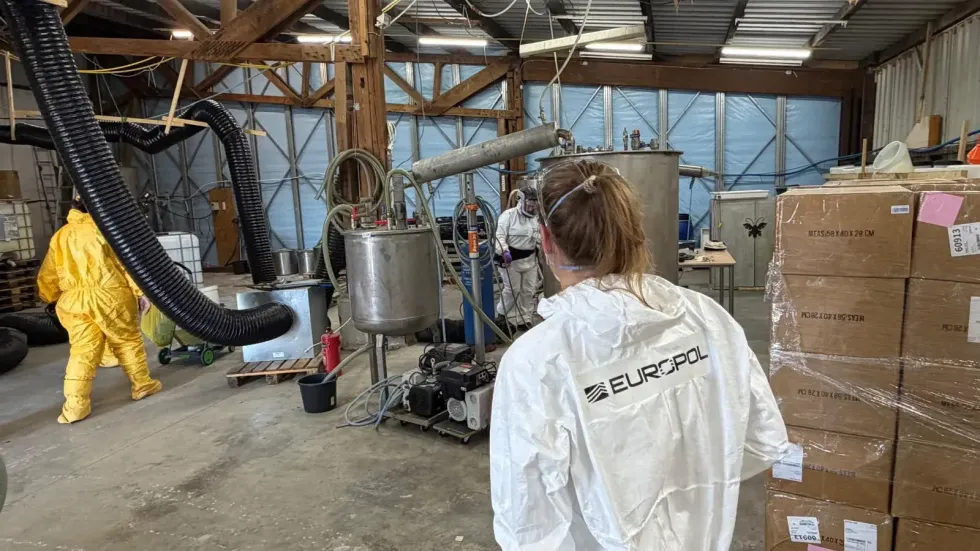
Europol has supported a large-scale international operation against an organised criminal network involved in the production of amphetamine in Germany and the Netherlands.

During the coordinated raids, several people were arrested and illegal drug laboratories were dismantled.

The investigation revealed that the criminal group specialized in producing large quantities of amphetamine, using clandestine laboratories and a logistics network to distribute the drug to various European countries.

Authorities seized drug production equipment, chemical substances, ready-made drugs, and other evidence related to criminal activity.

The operation was conducted with the participation of German and Dutch authorities, while Europol provided analytical and coordination support throughout the investigation.

The agency's experts helped exchange information and coordinate actions on the ground.

According to Europol, the production of synthetic drugs remains one of the most serious threats to security in the European Union.

Criminal organizations are increasingly using sophisticated laboratories and international networks to produce and distribute narcotics, making international cooperation crucial in the fight against this phenomenon. /Telegraph/

  •  

Russian oligarchs are taking capital out of the country, fears of economic crisis grow


Russian oligarchs linked to the Kremlin have begun massively moving their capital abroad, in a signal that analysts say shows growing uncertainty about Russia's economic future.

According to estimates published by various sources, businessmen close to the government in Moscow are trying to protect their assets from potential risks, while the Russian economy is facing great pressure due to international sanctions, high military spending and the weakening of some economic sectors.

The oligarchs, who for years have been among the main beneficiaries of the Russian economic system, are suspected of fearing a new wave of state intervention, including taking control of private companies or transferring assets to state-linked structures.

"When even the people closest to power start to worry, it's a sign of deeper problems," Kremlin critics say, Bloomberg writes.

However, Russian authorities have repeatedly denied that the country's economy is in crisis and have stated that Russia has managed to adapt to Western sanctions.

The shift of capital by wealthier businessmen is seen as an important indicator of the climate of uncertainty, while the Russian economy continues to be dependent on state spending and the defense sector. /Telegraph/

  •  

Iran attacks US targets in Jordan and Kuwait


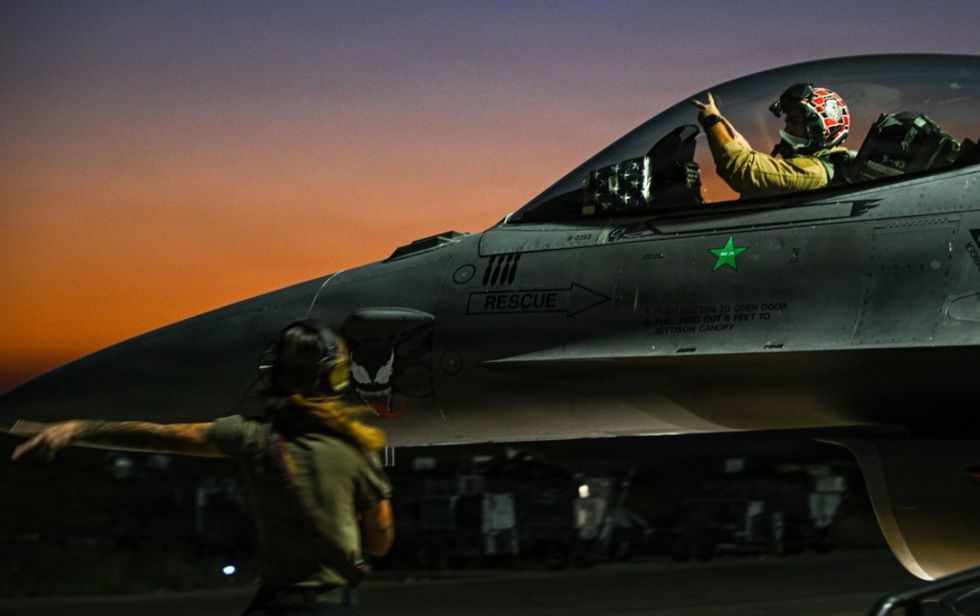
An Iranian intermediate-range ballistic missile (IRBM) is suspected of hitting the troop accommodation area at Muwaffaq Al Salti Air Base in Jordan, where US forces are stationed.

According to preliminary reports, the strike affected the area housing military personnel. The defensive structures at this base are designed primarily for protection from shrapnel and fire, but not to withstand a direct hit from ballistic missiles.

At the moment there is no official data on the number of casualties or damage caused, but there is concern that the attack may have caused losses among American troops.

Meanwhile, Iran has carried out another attack on targets in the region, striking a power and water desalination plant in Kuwait for the second day in a row, where a fire was reported.

The attack on the water plant comes after a similar facility was hit a day earlier. Authorities believe the plants are critically important to Kuwait, as the country obtains about 90 percent of its drinking water through desalination of seawater.

The attacks are part of a broader Iranian campaign against US bases and infrastructure in the region, including Ali Al Salem Air Base in Kuwait and other military facilities.

So far, American and regional authorities have not published an official assessment of the consequences of the recent attacks. /Telegraph/
  •  

Attack in Moscow region - Ukrainians strike Russia's largest logistics center


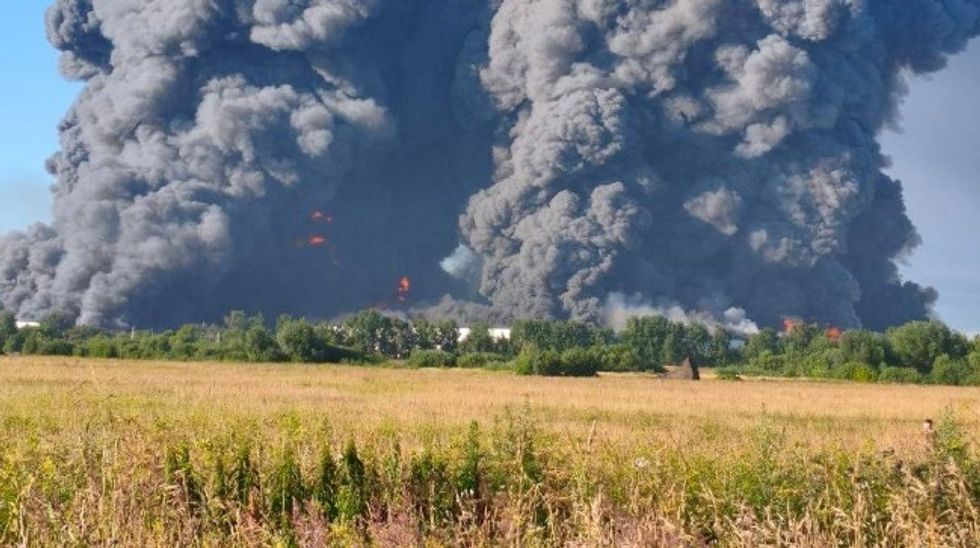
Ukrainian drones have hit the largest order processing center of Wildberries, the largest e-commerce company in Russia, in the Moscow region.

According to reports, the attack targeted one of the company's main logistics facilities, which serves as a central point for processing and distributing millions of orders across Russia.

Russian authorities did not immediately provide full details of the damage caused, while the Ukrainian side has not yet made an official statement about the operation.

Drone attacks on Russian territory have intensified in recent months, with Ukraine expanding its use of unmanned aerial vehicles to strike targets it considers linked to Russia's logistical, military and economic capabilities.

The Moscow region, including areas surrounding the Russian capital, has been hit several times by drone attacks, causing temporary disruptions and additional security measures.

Wildberries is one of the largest online sales companies in Russia and is considered the Russian equivalent of international e-commerce platforms. /Telegraph/

  •  

Europe and the US are "scorching" by record temperatures, cities should follow Arizona's example


Europe and the United States are facing unusually high temperatures, while cities are being forced to seek new solutions to adapt to extreme heat waves.

Experts say cities should follow the example of several areas in Arizona, USA, which have faced extreme temperatures for years and have developed ways to protect residents from the intense heat.

Among the measures being considered are expanding green areas, planting more trees, using materials that reflect sunlight on buildings and roads, and creating fresh public spaces for citizens.

Heat waves in Europe have brought record temperatures, putting health services and local authorities on alert.

Scientists warn that climate change is making these episodes more frequent and intense, writes the BBC .

In many European cities, traditional urban infrastructure is proving inadequate to cope with increasingly high temperatures.

The extensive concreting and lack of green spaces create the so-called "urban heat island effect", where temperatures in cities are significantly higher than in surrounding areas.

Experts emphasize that cities must change the way they plan their cities and prepare for a hotter climate, treating protection from extreme temperatures as a public safety issue. /Telegraph/

  •  

Scientists make historic discovery - first atmosphere on a "habitable" planet


Astronomers have detected for the first time an atmosphere around a rocky planet located in the habitable zone of its star.

It is a "super-Earth" called LHS 1140 b, and this discovery represents an important step in the search for worlds that could be suitable for life. Until now, atmospheres had only been detected on gas giant planets, writes ScienceAlert.

The search for habitable worlds is based on two main criteria: the planet must have a composition similar to Earth and be at a distance from its star that allows for the existence of liquid water, writes sciencealert .

"It's the first time anyone has found an atmosphere on a rocky planet in the habitable zone of another star," said Collin Cherubim, a planetary scientist at Harvard University and lead author of the study published in the journal Science.

Measurements show that LHS 1140 b has a mass about five times that of Earth and a radius 1.7 times that of Earth. This indicates that it is rocky in composition, but its lower density than Earth suggests the presence of a thin atmosphere and possibly some water.

The planet is an ideal object for study, as it is only about 50 light-years from Earth. It orbits a red dwarf star, which is much smaller and cooler than the Sun and has about a fifth of its mass.

"Twenty years ago we wondered whether other terrestrial planets existed at all. Then we discovered that they are common and found some in the habitable zone. The next question was whether any of them had managed to retain an atmosphere. Now we know that at least one of them has," said Robin Wordsworth of Harvard University.

Cherubim had previously predicted that LHS 1140 b might have a helium-rich atmosphere. To do this, he created a computer model that analyzed the processes of planetary mass loss.

The model showed that planets at the right distance from their star could lose hydrogen but retain helium, creating an atmosphere dominated by this gas.

"I call these planets 'helium-rich worlds.' I think they may not be that exotic, but a natural step in the evolution of many small planets. I wanted to test this prediction and looked for helium escaping from the planet – and I found it," Cherubim said.

To confirm the prediction, the researchers used the WINERED spectrograph at the Las Campanas Observatory in the Atacama Desert of Chile.

They observed LHS 1140 b and a neighboring planet during a night in September 2024, when both bodies passed in front of their star.

By analyzing light passing through the planet's atmosphere, scientists were able to determine which wavelengths were absorbed by the gases.

They found that LHS 1140 b, unlike its neighboring planet, showed signs of a helium atmosphere that is escaping into space at speeds of hundreds of thousands of kilograms per second.

This process could be caused by the star's solar winds or by magnetic interactions between the planet and the star. However, the phenomenon appears to change over time, as it was not observed during another observation in 2025.

One of the most important aspects of the discovery is the fact that LHS 1140 b has managed to preserve its atmosphere for more than three billion years, even though red dwarfs are known for their unstable activity.

"The planet receives from its star about 42 percent of the energy that Earth receives from the Sun," Cherubim explained.

"Although it has been exposed throughout its history to the highest levels of X-ray and ultraviolet radiation that typically destroy the atmospheres of rocky planets, it has retained some of the helium it probably received during its formation," he claimed.

Scientists will now focus on further analysis to find out if the planet has oceans or other features that could support life.

The fact that this discovery was made with a telescope on Earth shows that ground-based observatories also have an important role in studying atmospheres outside the solar system, alongside space telescopes such as the James Webb Space Telescope (JWST).

"This was a confirmation of the model and I hope it is just the first of many future observations," Cherubim concluded. /Telegraph/

  •  

Fires, drought and storms hit Europe


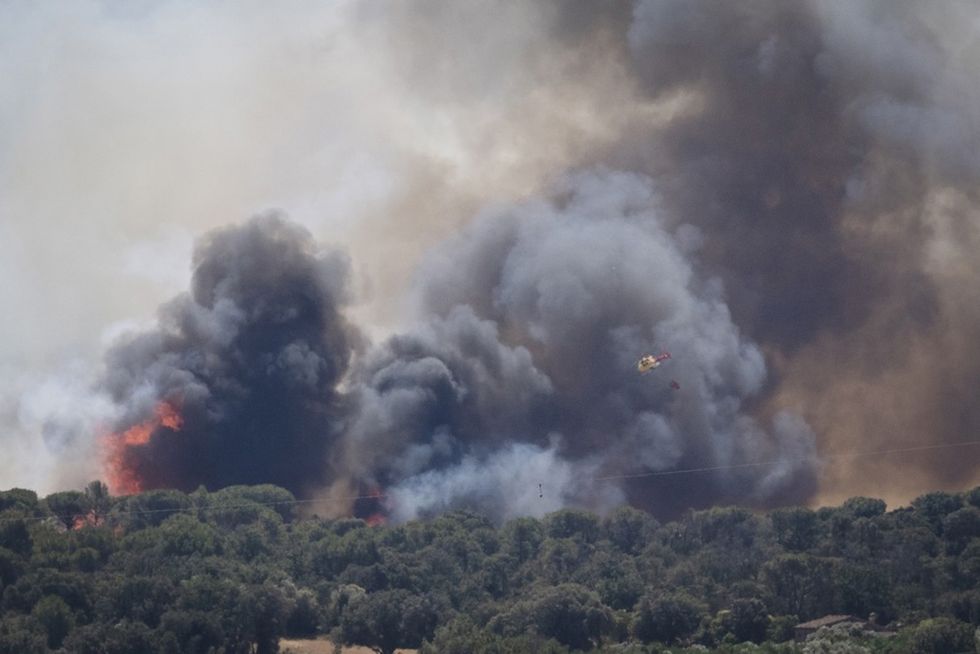
Firefighters in northeastern Spain are battling forest fires with the help of 30 aircraft today, after a large blaze forced the evacuation of around 1,000 people.

The situation comes after recent heatwaves that have dried out vegetation across much of Europe.

Successive waves of extreme temperatures have pushed thermometers to unprecedented levels in large areas of the continent, causing water shortages, crop damage and thousands more deaths than usual.

According to Reuters, the average temperature in Europe today is 27.5 degrees Celsius, which is 4.2 degrees higher than the average maximum temperature for July 17 in the period 1961-1990.

In France, the drought has worsened every day since late May. A nuclear power plant in the south of the country could be forced to shut down after high temperatures in the Mediterranean Sea made the water too warm to cool the reactors.

In Germany, low water levels on the Rhine River have hampered river transport, leading to increased transport costs. While temperatures have started to drop in some areas, powerful storms have appeared.

Two people have died in central and eastern France. One of the victims is a woman in the Saint-Victurnien area, in the Haute-Vienne department, who died after a tree fell on her.

In the eastern part of the country, in Dolomieu, the body of a man was found in a factory destroyed by fire. According to the AFP agency, the fire was caused by a lightning strike.

French grid operator Enedis confirmed that a total of 53,000 households were left without electricity. The biggest supply problems were recorded in the Auvergne-Rhône-Alpes regions in the southeast and Nouvelle-Aquitaine in the southwest of France.

The Spanish meteorological service warned that temperatures will start to rise again on Sunday. In some areas of Andalusia and La Mancha, temperatures of 42 to 44 degrees Celsius are expected, due to the arrival of hot air from North Africa.

A forest fire near Ores, in the northeastern region of Aragon, spread over more than 12,000 hectares on Friday night. Around 300 soldiers are battling it, assisted by helicopters and five firefighting aircraft.

Firefighters are also trying to control blazes near Madrid and in Guadalajara province, where about 1,500 hectares have burned and a children's summer camp has been evacuated.

The World Health Organization (WHO) warned last week that Europe faces "a deadly few weeks" due to new heat waves forming over the Atlantic Ocean.

Scientists monitoring so-called excess deaths said that during the heatwave in late June, thousands more people died in Europe than usual for this time of year. /Telegraph/

  •  

Merz: Macron will no longer be president of France, but Berlin-Paris coordination will continue


German Chancellor Friedrich Merz has stated that Berlin will continue to work towards a close relationship with France, despite political developments in Paris and the election of the next French president.

Speaking about France's political future, Merz said that current President Emmanuel Macron will not be able to run for a new term, but expressed his belief that his successor will be guided by the common interests of both countries.

"Emmanuel Macron will not be able to be the next president of France, but I assume that whoever succeeds him will be guided by what is right and necessary for the interests of our countries," Merz said.

The German Chancellor stressed that Germany will continue to strengthen its partnership with France, regardless of the election result.

"We will do everything we can to make cooperation with our French neighbor as close, deep and based on trust as possible, regardless of how the French people vote," he said.

Merz added that this approach applies to both the Élysée Palace, the seat of the French presidency, and the National Assembly of France.

"Germany's hand will always remain extended for deeper and more reliable cooperation with France, regardless of the decisions of the voters in our two countries," the German Chancellor declared.

Otherwise, Macron cannot be president of France anymore because the French Constitution limits the president to two consecutive terms.

Macron was first elected president in 2017 and was re-elected for a second term in 2022. According to Article 6 of the French Constitution, a president cannot serve more than two consecutive terms. /Telegraph/

  •  

US strikes Iran for seventh consecutive night, CENTCOM: We are weakening Tehran's military capabilities


The United States has launched another series of airstrikes against Iran, marking the seventh consecutive night of military operations, the US Central Command (CENTCOM) announced.

In a statement published on the X platform, CENTCOM confirmed that the attacks continue with the objective of weakening Iranian military capabilities.

"The attacks are designed to continue to degrade Iran's military capabilities, as directed by the Commander in Chief," the US military said in a statement.

The US military did not immediately provide details on the number of targets hit, their locations or the damage caused by the latest attacks.

The campaign of attacks comes at a time of high tensions between Washington and Tehran, with both sides engaged in military clashes and diplomatic efforts to manage the crisis.

According to US officials, the operations are aimed at limiting Iran's ability to develop and use military capabilities that could threaten US interests and its allies in the region. Meanwhile, Iranian authorities have criticized the US attacks and warned of consequences for continuing military operations. /Telegraph/

  •  
❌